CareersRemote Sales Jobs
Remote Life Insurance Sales Jobs in Fort Worth
You sell life insurance by phone and video to people who asked to hear from an agent. We teach you the setup, the scripts and the schedule. It takes 50+ hours a week and pays by commission, and we explain both before you start.
What remote work means in this role
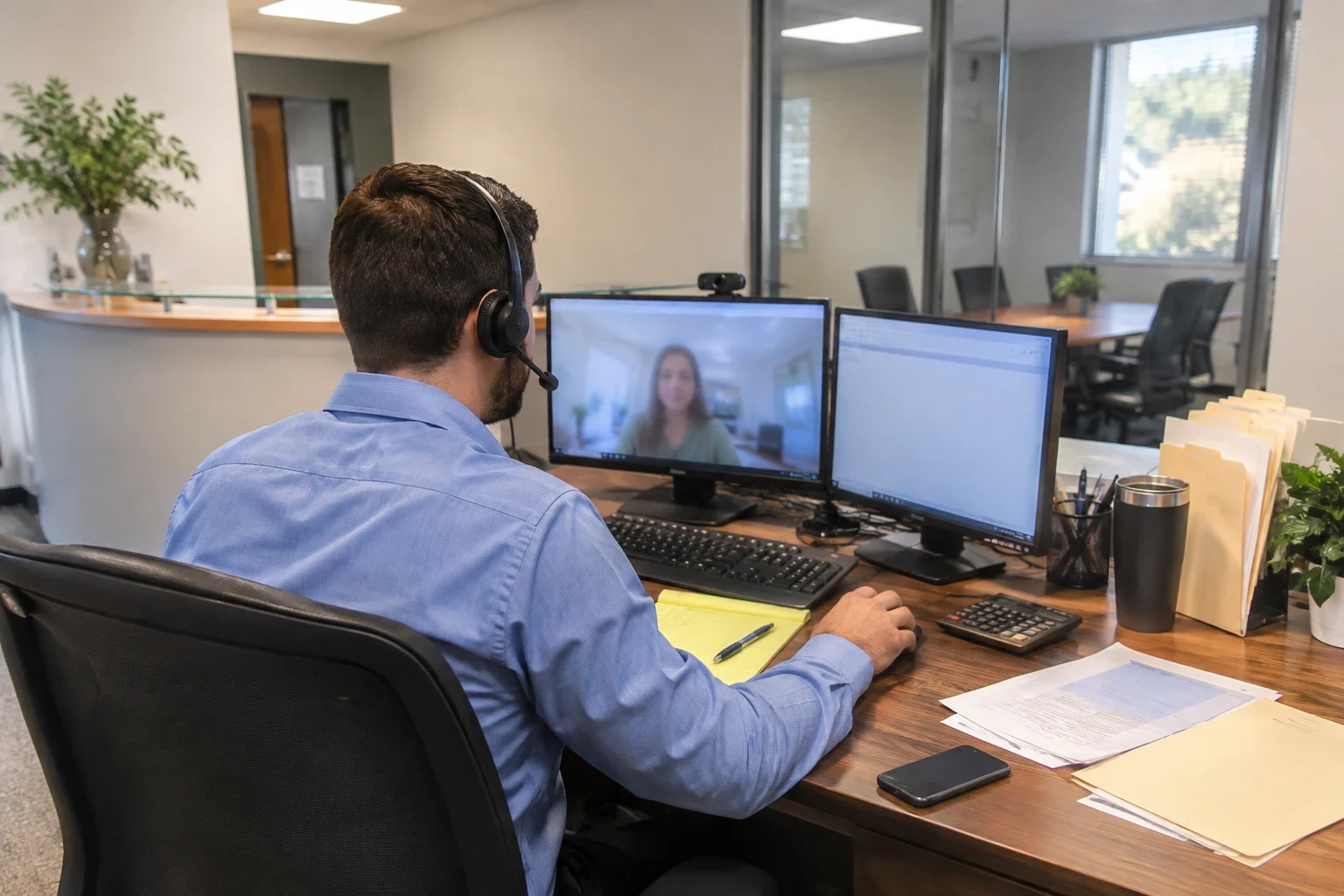
A remote agent here runs every appointment from a laptop and a phone. You call people who filled out a request for life insurance information, set a time, then walk them through options on a video call with a shared screen. Applications are completed electronically, so the whole sale happens without a kitchen-table visit.
Remote does not mean loose. The agents who do well treat a spare room like an office: fixed start time, a block for calling new leads, a block for scheduled appointments and evening slots, because many clients are only free after their own workday ends. You can live in Saginaw, Benbrook or across Fort Worth and work the same hours as everyone else on the team.
Before you commit, we lay out in writing how the work is structured and what you pay for versus what the agency supplies. No surprises after you sign a contract.
What the agency gives a remote agent
Licensing guidance
Texas has three parts to the life license: a state exam taken through Pearson VUE, a background check with fingerprints at IdentoGO, and an application filed with TDI. We lay out the order and timing so nothing stalls. The fees are yours to pay.
Free training on the remote setup
Training covers the product, the scripts and the tools: how to run a video appointment, share your screen while you compare options and complete an electronic application without losing the client mid-call.
Agency-paid leads
Agency-paid leads mean you don't buy your own. They are people who requested information, so your calls start with someone expecting to hear from an agent. Details are on the Agency-Paid Leads Program page.
Daily coaching over video
New agents join regular coaching calls and get call reviews from producing leaders. Hearing your own recorded call picked apart is the fastest way to fix an opener or a weak close.
One-on-one mentorship
You are paired with someone who has done the work remotely and can answer the small questions that slow new agents down, like how to handle a no-show or a dropped video link.
Who remote sales fits, and who it doesn't
You can hold a 50+ hour week alone
Nobody checks your desk at 9 a.m., and coaching happens only by phone and video. If you can keep a full schedule from home on your own, the remote model works in your favor.
You take coaching without arguing
Call reviews are direct. Agents who adjust their scripts after feedback improve quickly; agents who defend every line tend to stall.
You will study for the state exam
You cannot sell until your Texas life license is issued. You must be 18+ (the Texas license minimum) and willing to study for and pass the exam.
Not for anyone who needs a salary
This is commission-only 1099 work with no base pay. If you need a fixed paycheck every two weeks right now, this is the wrong fit.
Not a side gig
Leads go cold fast and evening appointments are where many sales close. A few hours on weekends will not produce steady results.
Five steps between your first call and a live video appointment
- 1
Phone interview about the role
This first conversation covers what the job asks of you: the 50+ hour week, commission-only pay and whether your computer, phone and internet can handle remote work. Ask anything about leads or contract terms and you get a straight answer.
- 2
Pass the Texas life exam
You schedule the state life exam through Pearson VUE. Texas has no required prelicensing course, but we direct you to study material and follow up on how your prep is going.
- 3
Fingerprints and TDI application
You open your file on the TDI fingerprint portal first, then go to an IdentoGO location for the background check. The final step is filing the license application itself through Sircon or NIPR.
- 4
Training and contracting
After the license comes through, you work through product and script training, install your software and get contracted. Practice calls during this stage are where your headset, camera and connection get tested.
- 5
First appointments
You begin reaching out to agency-paid leads. A mentor stays close for your early video appointments and goes over each one with you afterward.
What moves a remote agent's income and costs
Remote agents are paid by commission on policies placed, not by the hour, so income varies widely from person to person. Your results depend on how many hours you put in, how well you run an appointment and how quickly you reach new leads. Read the Earnings Disclaimer page before you decide; no result is typical or guaranteed.
- Hours on the phone
- Time actually spent dialing and in appointments matters more than time logged in. A 50+ hour week with long gaps produces less than it sounds like.
- Skill and speed to contact
- A lead who requested information an hour ago is far easier to reach than one from last week. Agents who call fast and close cleanly on video earn more from the same lead flow.
- Advances and chargebacks
- Some commissions are paid as an advance when a policy is issued. If that policy lapses or cancels within the chargeback window, part of the advance is taken back. The How Agents Get Paid page explains this in full.
- Your own expenses
- As a 1099 contractor you cover licensing fees, errors and omissions insurance if required, plus your laptop, headset, phone and a reliable internet connection. We go over the full list on the career interview call.
Questions about working remotely
Something not covered here? (817) 839-4504
Is the job fully remote?
Appointments run by phone and video, so you work from home. Interviews, training and coaching happen the same way, so neither you nor your clients ever need to meet in person.
What does a normal remote work week add up to?
Expect a week north of 50 hours. That time covers dialing fresh leads, running video appointments, follow-up and coaching calls. Evenings tend to be the busiest stretch because that is when most clients are off work.
Can I do this part-time or while in school?
We do not recommend it. Leads need fast follow-up and the training load is heavy at the start. Someone with only a few spare hours a week usually struggles to build momentum.
What does a typical day look like for a new agent?
A morning coaching call, then a block of calls to fresh leads to book appointments. Afternoons and evenings are mostly video appointments, with notes and applications completed right after each one. Many days end with a short review of a recorded call.
What equipment do I need to start?
A laptop that handles video calls without lag, a phone, a headset with a decent microphone, a webcam and stable internet. A quiet room with a door makes a real difference in how clients hear you.

Talk through the remote setup with us
Bring your questions about hours, equipment, leads and pay. We will tell you what the work really looks like and whether it fits your situation.